We cross the border into Cambodia, a country of 16 million people, 90 percent of whom are Khmer, with a small minority who are Chinese or Cham (Muslim Khmer).
Governance — Cambodia today is ruled by a King and a “democratically-elected” National Assembly that has been controlled by the communists (Cambodian People’s Party – the old Khmer Rouge) for 25 years. In effect, it is a communist country with a King.
The King, Norodom Shamoni, the son of the previous king Sihanouk (on-and-off king since 1941) is head of state. The Prime Minister, Hum Sen, is “head of government” and has been in this position since taking over in a bloody coup in 1998. Popular elections every 5 years are never in doubt, and all of the executive, legislative, and judicial functions of government are under Hun Sen’s control.


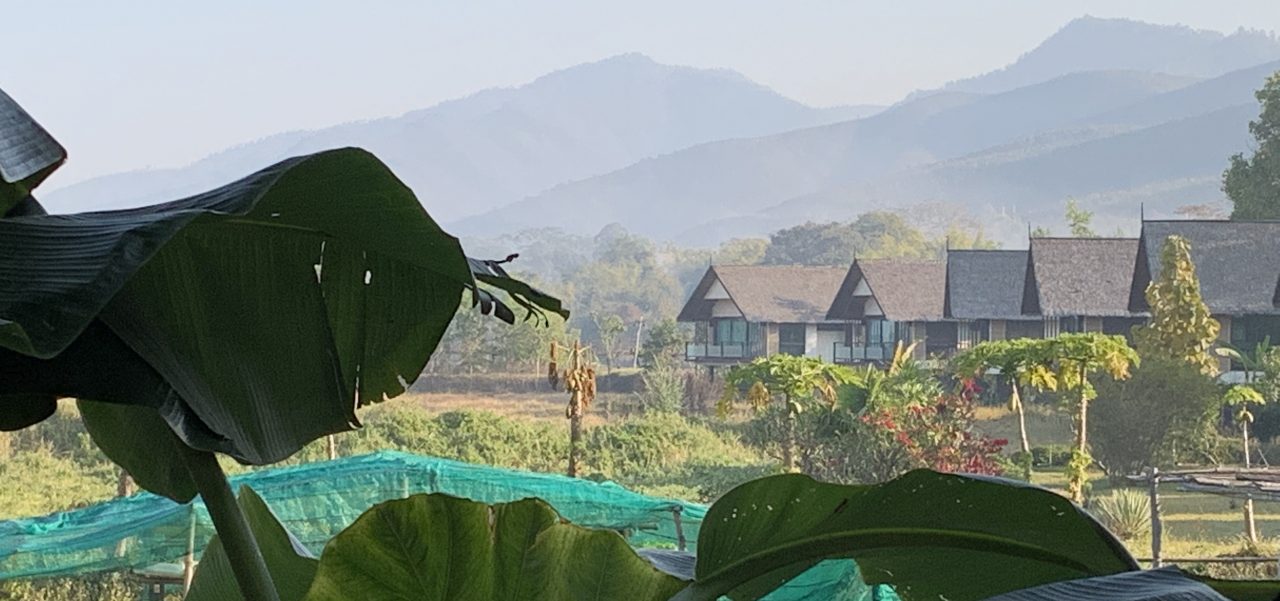
First Impressions — Our initial impression entering Cambodia is how dry it is. We see huge rice fields that are brown and barren – a stark contrast to the lush greens we just saw in Vietnam.

The reason is that much of Cambodia is flat – almost a bowl shape with hilly areas near its borders – with a natural watering mechanism – the huge Tonle Sap (“Great Lake”) in the center of the bowl – that fills with water from the Mekong River in the rainy season and pumps water back into the Mekong in the dry season. A lot of Cambodia is not fertile soil, but the areas around the Lake that are fertile come to life when the rains arrive and dry out by the end of the dry season. While Vietnam gets in up to 3 rice plantings a year, Cambodia gets only one.
This year the dry season has been unusually dry – so Tonle Sap has drawn well away from its banks and the surrounding area is just brown. Chinese damming of the Mekong River and lack of environmental protections in Cambodia will make water even more scarce in the coming years.
Tourism – Another difference this year is the absence of Chinese tourists due to the coronavirus outbreak. The Chinese are viewed as both a blessing and a curse in SE Asia. The blessing is they come in mass and spend plenty of money as tourists. They account for a large portion of the tourist revenue here. The curse is that they come in mass.
Due to the effects of the coronavirus this year, Chinese tourism is SE Asia is non-existent and tourism overall is down significantly because European and American tourists are cancelling plans to tour Asia. Our guide in Angkor Wat told us that they usually have 7 to 8,000 tourists a day in peak season — this year they have only about a thousand a day, and this number is dropping. We have enjoyed seeing the sights without the usual masses of tourists, but we worry that it is a huge economic blow to the region that will have lasting effects for these developing countries.
Phnom Penh – This was a sleepy town on the Mekong River before the French arrived in the mid-1800s and made it their colonial capital. Once regarded as “the Pearl of Asia,” Phnom Penh today is a faded remnant of that glamorous past. It is a city that is busy, but not that busy, glamorous in spots, but just developing fancy high rises and trying to pull out of the long slump Cambodia has been in. It is a city of great potential, yet to be realized.


Food — Cambodia’s traditional specialities are: Fish Amok – fish, lemongrass, coconut milk, turmeric, and chili served in a banana leaf; and Beef Lok Lak, slices of beef stir fried with onions and tomatoes, and served with an egg. Cambodian cuisine tends to be mild and needs a side order of sliced hot pepper and soy sauce to spice it up.
We stop for lunch at Friends, the Restaurant, near the Royal Palace. Friends is a highly regarded Phnom Penh restaurant that is part of the Tree-Alliance of SE Asia restaurants the provide their profits to support training underprivileged kids in the restaurant business, and providing experience in the restaurants for these kids. It is a great program supported by GAdventures, and the food is fantastic!

Royal Palace and Silver Pagoda — The Palace grounds are quite large and accommodate spacious gardens and several buildings. Within the grounds are a walled off area with the King’s residence that is off-limits to tourists. The rest of the grounds include a large Throne Hall – a large open hall for official receptions with the King’s golden throne at one end (photography not permitted inside) — a banquet hall, a royal treasury, and the Silver Pagoda.
The Palace and surrounding building were built in the 1890s and early 1900s. They are fine examples of the classic Khmer roof style that makes Cambodian architecture distinctive.


The Silver Pagoda gets its name from the 5,000 solid silver tiles that make up its floor (also not allowing interior photos). It is officially the Wat Prea Keo (Pagoda of the Emerald Buddha). The pagoda was originally built as a wood building in 1892. The present building is the result of a rebuild in 1962.


Wat Phnom — This is a prominent pagoda placed on top of the only hill in town and linked to the name of the town. Legend has it that the first temple was built on this spot in 1372 to house 4 Buddha statues floating down the Mekong the were deposited on this hill and discovered by Lady Penh. The city gets its name that means “Hill of Penh” from this temple. The current temple is the result of a rebuild in 1926.


An Evening Cruise on the Mekong – We have nice evening for a cruise on the river – to enjoy the breeze and watch the sunset.


Traditional Cambodian Dance— We are glad we get to see a small group of dancers perform several traditional dances and folk dances from Khmer culture. Some of these dances incorporate the hand and foot positions seen in the carvings of dancers in the temples at Angkor — they date to the time of the Khmer Empire, and most likely before. They are the images we had of Cambodia from our childhoods.
The folk dances are lively performances that relate to the interplay between young men and women in their teen years and include a lot of light joshing and humor around the day-to-day work of fishing, growing rice, and preparing food. Great fun to watch.


Next: Lessons from “Killing Fields”